Iran wins WHO World No Tobacco Day award
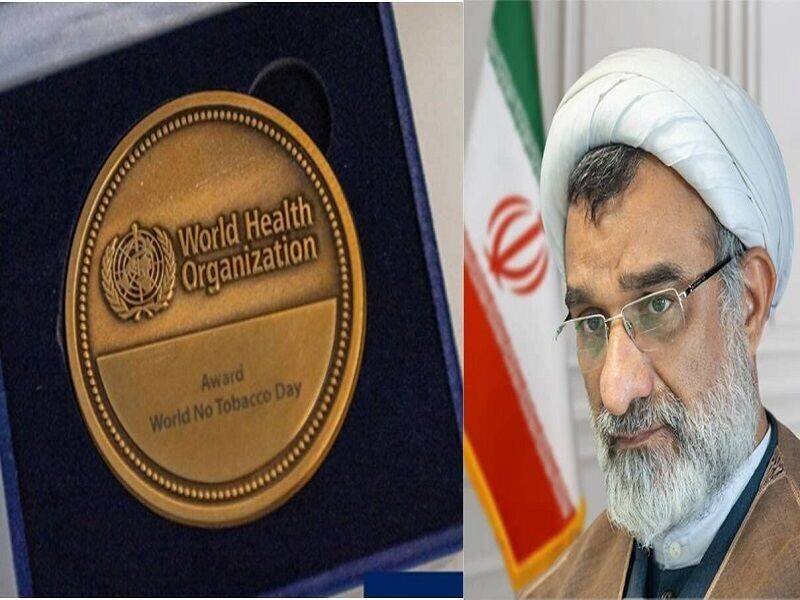
TEHRAN – Abdolhossein Khosropanah, Secretary of the Supreme Council of the Cultural Revolution and Behzad Valizadeh, former head of National Tobacco Control Secretariat have received the World Health Organization (WHO) for their outstanding contributions to tobacco control.
Each year, the WHO present the award to individuals and organizations from each of the six WHO regions.
According to the WHO, the Secretary of the Supreme Council of the Cultural Revolution has won the award for the strategic shift in the management of tobacco control in Iran, in which the issue of combating tobacco has been transformed from a purely therapeutic issue to a priority in the country’s ‘cultural engineering map’.
What has drawn special attention from international evaluators is the approval and issuance of a comprehensive document titled ‘Issues, national tobacco control strategies and measures, organizational roles and division of labor to prevent tobacco use in the country’.
The official efforts involved division of labor among organizations, which is assigning tasks to the ministries of education, science, and culture, as well as the Islamic Republic of Iran Broadcasting, to protect the young generation, and focusing on cultural prevention, and shifting the focus of tobacco control efforts to educational environments to foil the misleading appeal of emerging products, such as e-cigarettes.
Implementing mechanisms to monitor and oversee the council’s approvals in the social health sector to help mitigate the influence of indirect tobacco advertising in cultural products is among other measures taken by the official.
Observed on May 31 annually, World No Tobacco Day aims to raise awareness of the threats of tobacco use and the tactics used by the tobacco industry, and to promote effective measures to end nicotine and tobacco addiction.
Themed ‘unmasking the appeal – countering nicotine and tobacco addiction’, the day highlights how the tobacco and nicotine industry continues to repackage and rebrand its products to attract a new generation – particularly children and adolescents – while attempting to evade stronger tobacco control measures worldwide.
In light of decades of progress in reducing tobacco use, the tobacco industry’s tactics remain relentless.
Companies are aggressively marketing new and emerging nicotine products such as e-cigarettes, nicotine pouches, and synthetic nicotine devices – often disguised as “innovation” – to sustain addiction and recruit new users. These strategies threaten to reverse hard-won gains in tobacco control and public health.
Use of nicotine products such as e-cigarettes and nicotine pouches is increasing rapidly among youth.
Startling new data reveal the scale of the crisis: at least 40 million children aged 13–15 globally report current use of at least one tobacco product. Of these, 20 million smoke cigarettes and 10 million use smokeless (oral/nasal) tobacco. Also, at least 15 million adolescents aged 13–15 years are already using e-cigarettes, and in countries with data, children are on average nine times more likely than adults to vape, WHO website reported.
Despite these concerning trends, significant policy gaps remain. World Health Organization’s data for 2024 show that only 7 countries in the Region ban all e-cigarette flavours, while 5 do not apply age restrictions on sales. Eight countries have no restrictions on advertising, promotion and sponsorship; 19 have partial bans; and 10 do not regulate e-cigarette use in public places. These gaps leave young people particularly vulnerable to targeted marketing and product designs intended to sustain nicotine addiction.
Building on the momentum of the 2025 campaign, World No Tobacco Day 2026 reaffirms the WHO’s commitment to exposing the evolving strategies of the tobacco and nicotine industry and to advancing policies that protect young people and communities from addiction.
This year’s campaign aims to expose the industry’s strategies – including the use of synthetic nicotine, nicotine salts and analogues designed to enhance addiction potential while being marketed as innovative or even less harmful; promote stronger policy action – through bans on flavours, advertising and promotion (including digital and social media), and through stricter regulation of packaging and product design that increase youth appeal; and empower youth and the public – by providing knowledge and tools to recognize and resist industry influence and by ensuring access to evidence-based cessation support.
In Iran, the National No Tobacco Week was held from May 25-31 with the theme of “Exposing the allure and false advertising for a tobacco-free generation.”
Monday, May 25, “tobacco-free families for a tobacco-free generation,”; Tuesday, May 26, “tobacco-free generation with self-care and mental health; Wednesday, May 27, “tobacco-free generation by promoting religious teachings; Thursday, May 28, “commitment and participation of trade unions for a tobacco-free generation,”; Friday, May 29, “tobacco-free generation by healthy sports and recreation; Saturday, May 30, “educating teenagers and youth for a tobacco-free generation,”; and Sunday, May 31, “commitment and participation of media to expose the tricks of the tobacco industry” were the weekdays of the event.
Leave a Comment